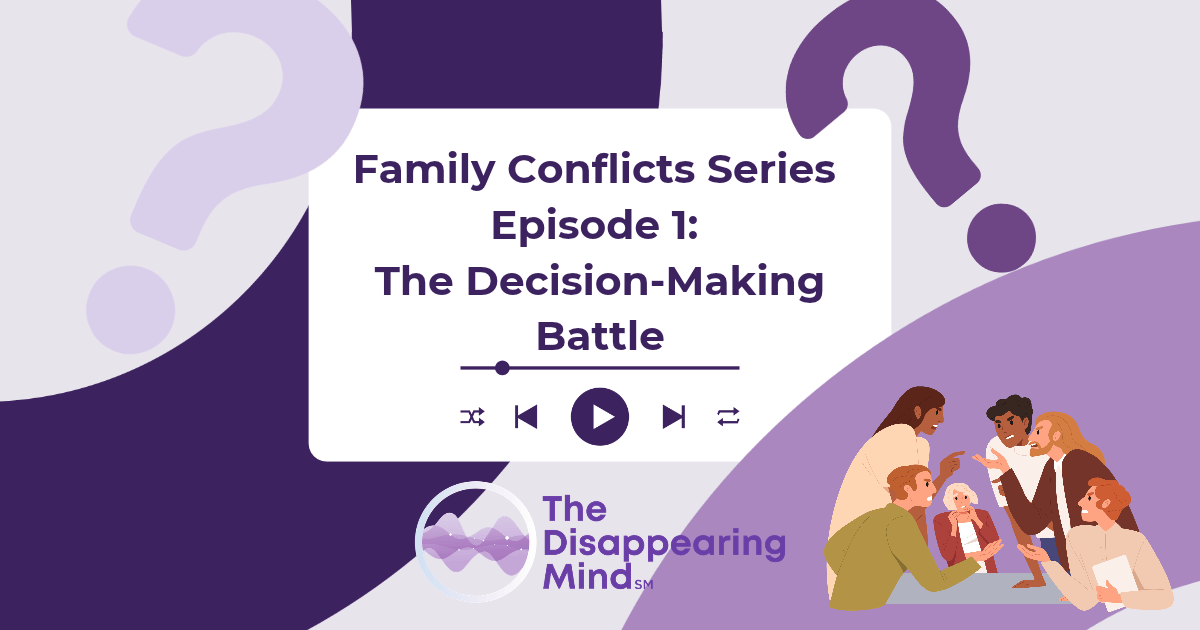
In recognition of National Family Caregivers Month, we’re revisiting a powerful episode from our Family Conflicts series that explores one of the most challenging questions families face after a dementia diagnosis: Who should make the decisions? When spouses, adult children, and other loved ones have differing opinions about care, even the best intentions can lead to tension and conflict.
Through a relatable family scenario, host Dawn Platt examines the emotional and practical realities of dementia-related decision-making, offering guidance on navigating disagreements, honoring family relationships, and keeping the needs of the person living with dementia at the center of every conversation.
Whether you're a caregiver, family member, or trusted advocate, this episode provides valuable insight into finding common ground during difficult moments.
Looking for Additional Guidance?
Family disagreements around dementia care are more common than many people realize. If you're navigating difficult decisions with siblings, a spouse, or other loved ones, this article explores who has the legal authority to make decisions for a loved one living with dementia, the most common causes of family conflict, and practical strategies for finding common ground while keeping your loved one's needs at the center of the conversation. To learn more, read: "Family Conflict Series Episode 1: The Decision-Making Battle."
Continue exploring our Family Conflict Series for more expert insights on the challenges families face throughout the dementia journey:
Episode 2: The Backseat Caregiver
Episode 3: Blended Family Dementia Drama - Who Really Knows Best?
Episode 4: When Promises Become Impossible
Episode 5: Who Controls the Money in Dementia Caregiving?
Episode 6: "You Said You'd Never Put Me in a Home" - A Spouse's Heartbreak
Episode 7: When One Sibling Carries All the Weight
Episode 8: When Dementia Affects Family Traditions
No two families experience dementia in exactly the same way, but the right information, tools, and conversations can help families navigate challenges with greater understanding, confidence, and compassion.
Explore Popular Resources and Topics